
Herbal salves are oil-based remedies infused with medicinal herbs to support skin healing, pain relief, and inflammation reduction. As someone who suffers from sensitive skin I am always careful about what I feed my skin… what better way than to make your own.
Wound Healing
These herbs contain antimicrobial and regenerative compounds that help heal cuts, burns and insect bites (or even acne and spots).
- Calendula (Calendula officinalis) – Triterpenoids stimulate collagen production, speeding up wound healing.
- Plantain (Plantago major) – Contains aucubin which has antimicrobial and anti-inflammatory properties.
- Lavender (Lavandula angustifolia) – Rich in linalool, a natural antiseptic that soothes irritated skin.
- Comfrey (Symphytum officinale) – Contains allantoin which promotes cell regeneration, healing bruises and sprains.
- Yarrow (Achillea millefolium) – A natural coagulant, useful for slowing bleeding in minor wounds.
Muscle & Joint Pain Relief
- Arnica (Arnica montana) – Contains sesquiterpene lactones which reduce swelling and pain.
- Ginger (Zingiber officinale) – Rich in gingerols which help with circulation and muscle relaxation.
- Cayenne Pepper (Capsicum annuum) – Contains capsaicin which blocks pain signals and improves blood flow.
- St. John’s Wort (Hypericum perforatum) – Soothes nerve pain, ideal for sciatica and muscle tension.
Dry Skin & Eczema Relief
- Calendula (Calendula officinalis) – Rich in flavonoids and triterpenoids, speeds up skin healing and reduces inflammation.
- Chamomile (Matricaria chamomilla) – Soothes irritation, calms redness and supports skin barrier repair (bisabolol).
- Oatstraw (Avena sativa) – Strengthens the skin barrier with beta-glucans, locking in moisture.
- Marshmallow Root (Althaea officinalis) – Provides deep hydration with mucilage compounds, softening dry skin.
- Nettle (Urtica dioica) – High in chlorophyll and minerals, reduces inflammation and itching.
- Saffron (Crocus sativus) – Contains crocin and safranal which help lighten scars, reduce inflammation and protect against oxidative damage.
How to Make a Herbal Salve
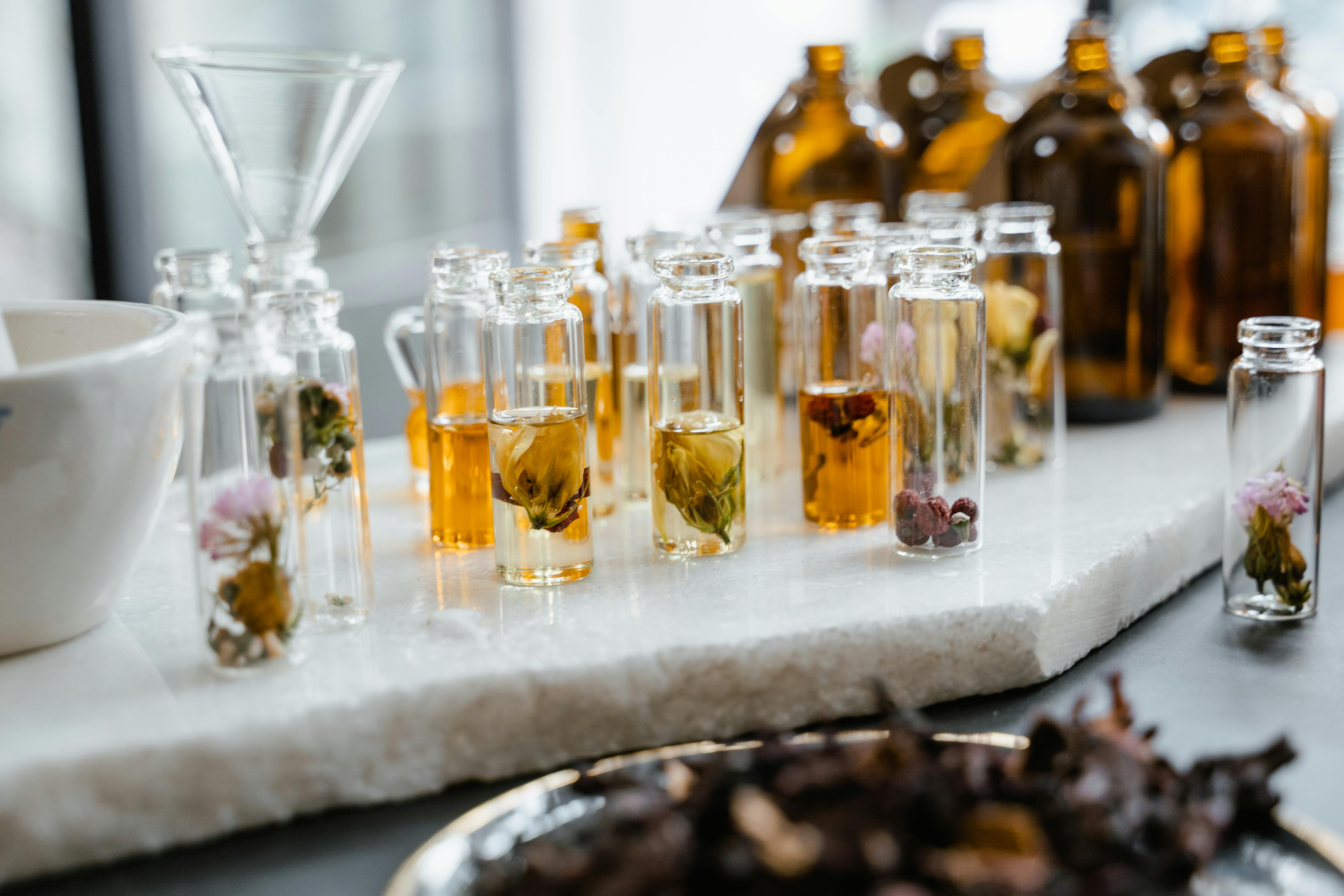
Step 1: Create an Herbal-Infused Oil 🌱
- Choose dried herbs (fresh herbs can introduce moisture leading to spoilage).
- Fill a clean, dry jar halfway with herbs.
- Cover with a carrier oil (olive, coconut, almond oil). Let infuse using one of these methods:
- Slow method: Store in a warm, dark place for 2–4 weeks shaking daily.
- Fast method: Heat gently in a double boiler at 40–50°C (104–122°F) for 2–4 hours.
Step 2: Make the Salve
- Strain the infused oil using a cheesecloth.
- In a heatproof bowl, combine:
- 100ml of infused oil
- 1 tbsp beeswax (for thickening)
- Optional (if you are not sensitive): 5 drops essential oil (lavender for relaxation, tea tree for antiseptic properties).
- Gently melt the beeswax into the oil using low heat.
- Pour into containers and let cool before sealing.
Tip: Add vitamin E oil to extend shelf life (prevents oxidation).
 Roots With Rita