

Lessons From The Trail
“Adopt the pace of nature: her secret is patience.”
– Ralph Waldo Emerson
Nature tells its stories gently, through the patterns in its leaves, the rhythm of its movements and the quiet persistence of its growth and resilience . Trails are where these gentle tales come alive but only if we slow down enough to truly see them….
But what does the research say about why the trail calls to us, and how does it benefit us at a deeper level?
Patterns of Growth and Survival
Moss and Lichens: Moss thrives in damp, shaded areas and often grows on the north side of trees in the Northern Hemisphere, acting as a natural compass. Lichens, a symbiotic relationship between algae and fungi, are highly sensitive to air pollution, making them excellent indicators of environmental health.
Tree Rings: The rings inside a tree trunk tell its life story. Wider rings indicate years of abundant resources, while narrow ones hint at drought or harsh conditions.

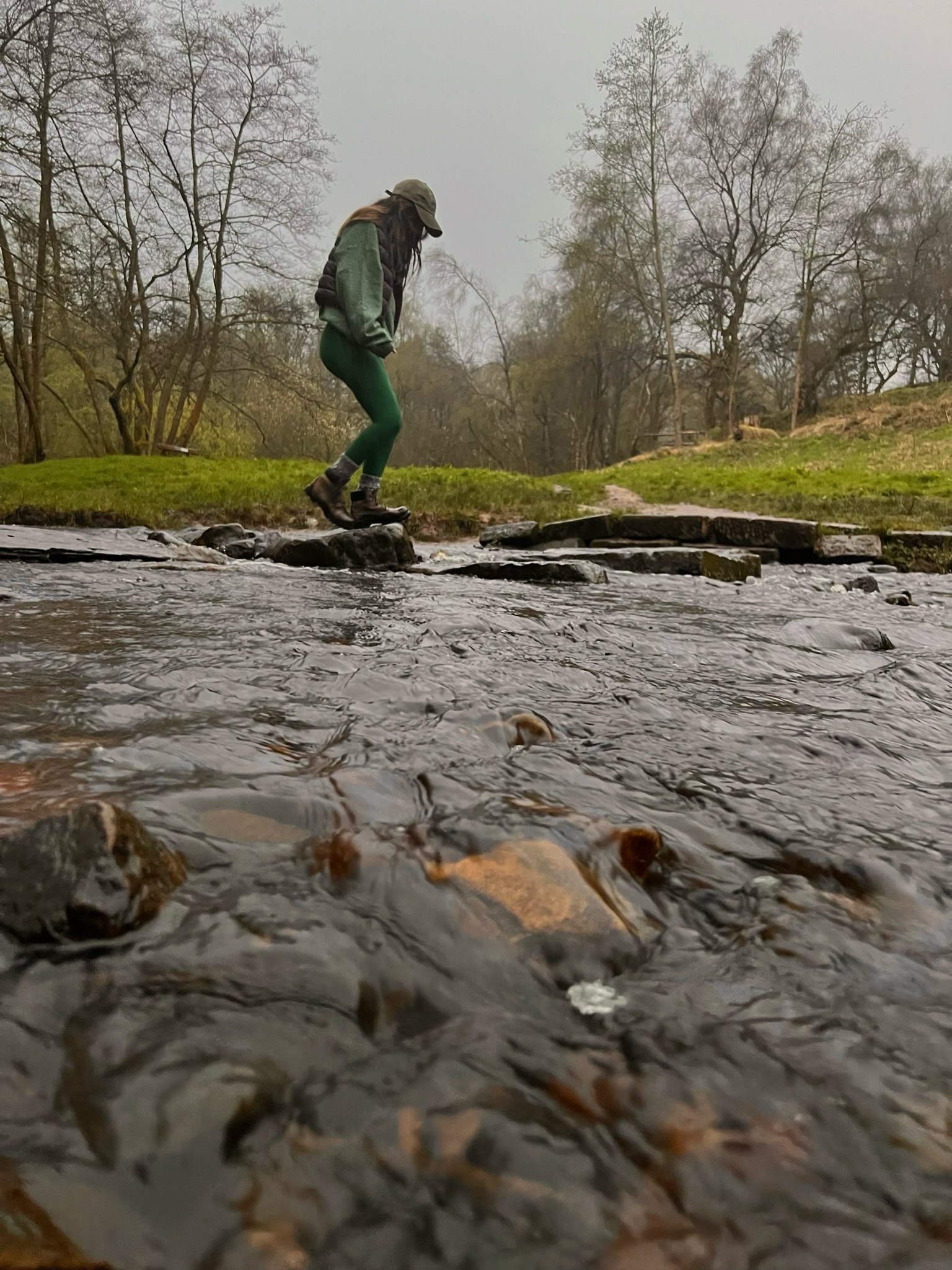
Water Flow : Understanding Hydrology
Water movement follows gravitational principles and landscape topography making it a reliable guide for navigation and survival.
- Water Flows Downhill: Surface water always seeks the lowest elevation due to gravity-driven hydrological cycles.
- Stream Bends and Erosion: Faster-moving water erodes the outer curve of river bends due to increased velocity, while sediment accumulates on the inner curve where flow is slower, creating predictable landscape changes.
- Water Table and Vegetation: Plants with high water dependency (e.g willows, alders) indicate proximity to groundwater sources.
- Underground Water Detection: Vegetation clustering and humidity levels can signal hidden streams or subterranean water reserves.
Application:
Follow downward-sloping terrain, note river bends for erosion clues, and observe plant types to locate hidden water sources.
Cloud Formations: Weather Prediction from Above
Clouds are among the most reliable indicators of upcoming weather changes, driven by atmospheric pressure, humidity and temperature gradients.
- Cirrus Clouds (Thin, Wispy, High Altitude): Formed from ice crystals at 6,000–12,000 metres, they indicate incoming weather changes within 24–48 hours.
- Cumulonimbus Clouds (Tall, Anvil-Shaped): Signify severe storms, thunderstorms, or tornado potential, growing from warm, moist air rising rapidly in unstable conditions.
- Stratus Clouds (Low, Grey Blanket): Indicate extended periods of light rain or mist, often forming in coastal or humid regions.
How to Apply It:
- If cirrus clouds increase in number, expect weather changes within a day or two.
- If clouds begin growing vertically instead of spreading, prepare for thunderstorms or heavy rain.
- Observe the speed and movement of clouds fast-moving clouds suggest incoming strong winds or a pressure change.

Indicators of Soil Composition and Moisture Levels
The color of the soil and the types of vegetation present can provide clues about the underlying soil composition, drainage, and fertility.
- Dark Brown or Black Soil → High in organic matter, nutrient-rich, and retains moisture well
- Reddish or Yellow Soil → Contains iron oxides.
- Reddish soil (hematite-rich) suggests good drainage and aeration.
- Yellow soil (goethite-rich) indicates poor drainage and prolonged waterlogging.
- Gray or Bluish Soil → Indicates water saturation and poor oxygen availability A bluish tint occurs when iron is in a reduced state due to prolonged anaerobic (low-oxygen) conditions.
 Roots With Rita